
FAQ’s for Patio Covers, Deck Projects, Railings,
If you don’t see your question below, please reach out to us at hello@decksandpatiocovers.com.
PATIO COVER FAQ’s
-
We install one premium system: a powder‑coated aluminum frame with impact‑resistant acrylic roof panels. It’s bright, durable, low‑maintenance, and engineered for Northwest weather.
-
Because it’s the one that consistently performs. After decades in the industry, I’ve seen what lasts and what fails. This system delivers the best combination of strength, light transmission, weather protection, and long‑term reliability.
-
No. The acrylic panels are designed to let natural light through while blocking rain and UV. You get a bright, usable outdoor space without the cave‑like feel of solid roofing.
-
Yes. The system is designed to meet local wind and snow load requirements for Kitsap County and West Puget Sound. Every structure is built to current standards for strength and durability.
-
Homeowners handle their own permitting. Every municipality is different, and managing your own application gives you direct control over communication and timelines. If you choose to pursue a permit, I’ll provide the structural information about your cover that you may need for your submission.
-
Yes. Each cover is built to fit your home and outdoor space. During your site visit, I’ll take measurements and design the layout around your home’s structure and your goals.
-
Absolutely. I evaluate your existing structure during the site visit to determine the best attachment points and support layout.
-
Most installations take 1–2 days depending on size and site conditions. I’ll give you a clear timeline during your consultation.
-
Yes. We can integrate lighting, fans, or other electrical features as part of the installation. We’ll discuss options during your site visit.
-
Patio covers are very low maintenance, but even the best low maintenance products require a little care.
Your patio cover is comprised of two very easy-to-caring products. Acrylic, which is basically the same material as the taillights on your car, and powder coated aluminum for a structurally sound frame.
To care for your patio cover is easy. Rinsing your patio cover with fresh water from the garden hose regularly is the easiest way to maintain the product.
For annual cleaning just wash it like you would your car. Even though the acrylic has a self-cleaning feature, I have found that a more thorough annual cleaning is still necessary to keep your patio cover in the best condition.
Important! Do not stand on your patio cover to clean it. You could slip and fall. Your patio covers self-cleaning feature make the surface extremely slick when wet.
I recommend you use a long handle RV brush to access the top of your patio cover from a secure position or location and to lightly scrub the top surface using car soap or a mild detergent in a five-gallon bucket with water. Let the soap set for a few minutes loosening any pollen and grim then rinse with fresh water from a garden hose.
That’s it. Your patio cover is clean, will look fresh, and you will be set to enjoy another year in your awesome outdoor living space
-
Our patio covers are locally manufactured and designed for the northwest to provide affordable and durable home improvement when looking to increase your homes usable outdoor living space.
The typical price range is $45 to $55 per square foot. Smaller covers, freestanding, or those requiring additional custom elements will have additional costs. Every project is unique with different variables and priced accordingly.
-
Yes. I can attach the cover to most home structures, including fascia boards, wall framing, and existing roof structures. During your site visit, I’ll evaluate the best attachment point based on your home’s construction and layout.
-
The cover includes an integrated gutter system that directs water away from your home. Downspouts can be placed where they make the most sense for your layout. This keeps water off your patio and protects your siding and foundation.
-
Acrylic panels are quieter than metal roofing. You’ll hear normal outdoor rain sounds, but not the loud “pinging” associated with aluminum or steel panels.
-
Yes. The system includes a manufacturer warranty on the frame and panels. Installation is performed to current standards as a licensed general contractor, ensuring long‑term performance.
Deck Project FAQs
Why PVC Decking – Wolf Serenity – TimberTech Advanced PVC
-
PVC decking is made from 100 percent synthetic material with no wood fibers. It doesn’t absorb moisture, won’t swell or rot, and performs extremely well in Northwest weather. It stays cooler underfoot, resists fading and staining, and requires very little maintenance. For wet, shaded, or coastal environments, PVC is the most reliable long‑term option.
-
Composite decking contains a mix of wood fibers and plastics, while PVC contains no organic material. PVC stays cooler, resists moisture better, and offers higher slip resistance. Composite is more budget‑friendly and comes in a wide range of colors, but PVC is the better choice when long‑term durability and moisture resistance are priorities.
-
I install two premium PVC decking systems: Wolf Serenity and TimberTech Advanced PVC (Azek). Both are high‑performance products designed for Northwest weather, and each offers different aesthetics and benefits depending on your project goals.
-
Both are top‑tier PVC products. Wolf Serenity offers excellent stability, a cooler surface underfoot, and strong fade resistance. TimberTech Advanced PVC provides highly realistic wood‑grain finishes and premium color options in the Vintage and Landmark collections. The right choice depends on your style preferences and layout.
-
The Vintage Collection features highly realistic wood‑grain textures with rich color variation. The Landmark Collection has a matte finish with bold, cathedral‑grain patterns for a more modern look. Both collections offer excellent slip resistance, durability, and long‑term performance.
-
PVC decking offers excellent slip resistance, especially compared to older composite products. Both Wolf Serenity and TimberTech Advanced PVC are engineered for traction in wet conditions, making them a strong choice for Northwest homes.
-
PVC stays cooler underfoot than most composite decking, especially in lighter colors. Wolf Serenity is known for staying particularly cool, and TimberTech’s lighter tones in the Vintage and Landmark collections also perform well in direct sun.
-
PVC decking is designed for long‑term performance. It won’t rot, swell, or absorb moisture, and it maintains its appearance with minimal maintenance. With proper installation and framing, a PVC deck can last several decades.
-
Yes. As a Wolf PRO contractor, Wolf Serenity decks include a 5‑year labor warranty on eligible repairs. TimberTech Advanced PVC includes a manufacturer material warranty, and all decks are built with code‑compliant framing and professional installation.
-
Yes. If you’re planning a patio cover, your deck can be built to integrate seamlessly with our premium aluminum‑and‑acrylic cover system. This ensures proper load support, drainage, and long‑term performance.
-
Maintenance is minimal. PVC decking doesn’t require staining, sealing, or sanding. Routine cleaning with mild soap and water is usually all that’s needed to keep it looking new.
-
Pricing depends on size, elevation, framing requirements, and the PVC collection you choose. PVC is a premium material, and most projects fall into a higher price range than composite. The best way to get accurate pricing is to fill out the contact form so I can review your project details.
-
Most projects take several days to a couple of weeks depending on size, framing requirements, and site conditions. Larger or elevated decks may take longer. After reviewing your project, I’ll provide a clear timeline.
-
Yes. We remove old wood decks and rebuild them with new, code‑compliant framing and premium PVC decking. This ensures long‑term performance and compatibility with future patio‑cover installations.
-
Yes. We install aluminum, composite, and cable railing systems that complement your deck design and meet current safety standards. Railings can be integrated with both deck‑only and deck‑plus‑cover projects.
Railing Systems FAQs
-
IDecks & Patio Covers install aluminum picket railings, aluminum with stainless‑steel cable, aluminum with glass panels, TimberTech Classic Composite Series, TimberTech Pinnacle Rail (PVC), and specialty options like privacy screening and glass wind walls. All systems are designed for Northwest durability and long‑term performance.
-
Aluminum railing with pickets is the most budget‑friendly system. It offers a clean, traditional look with excellent durability and very low maintenance.
-
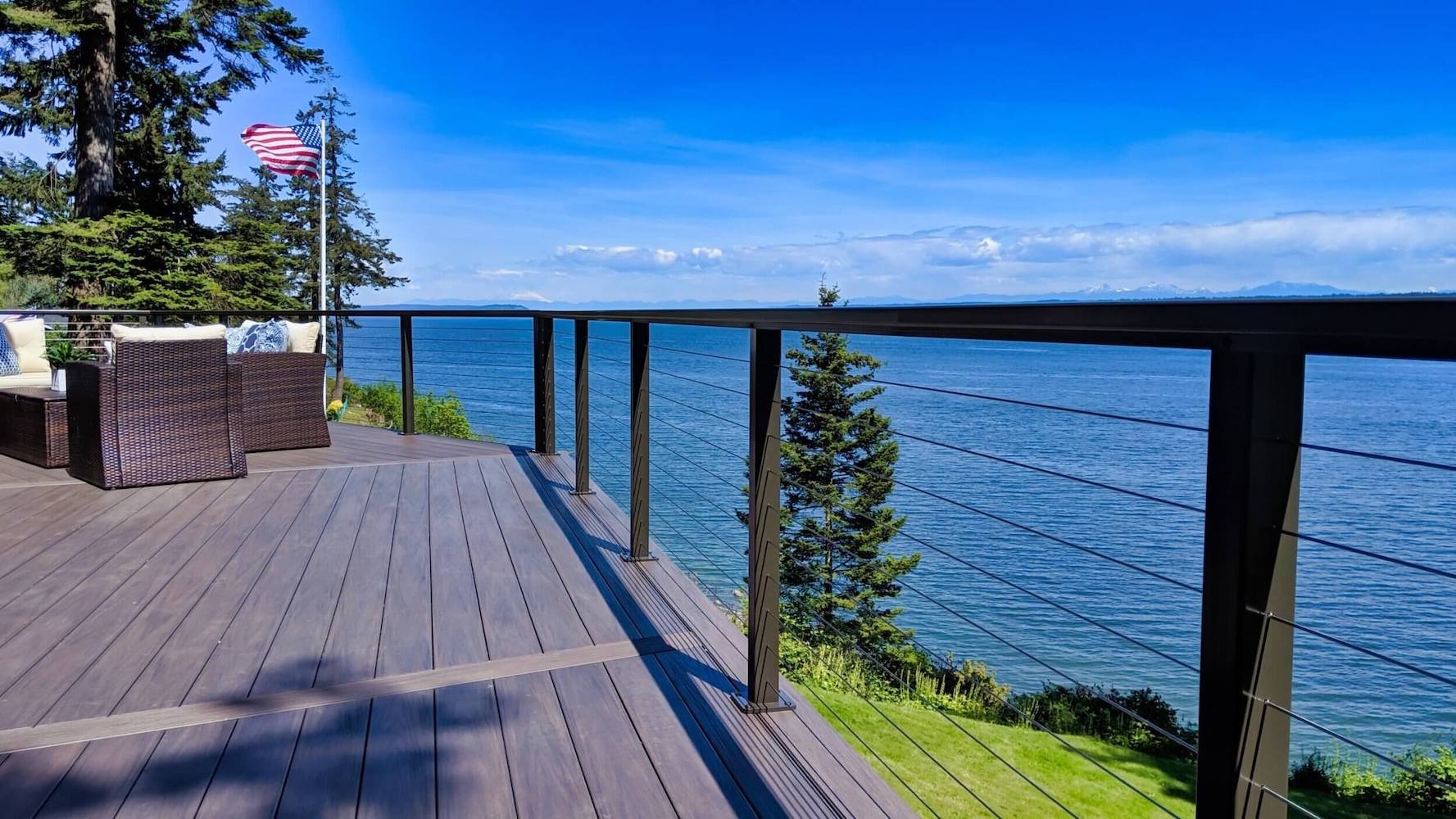
Aluminum railing with stainless‑steel cable is the most popular. Homeowners like the modern look and minimal visual obstruction, especially on elevated decks or properties with views.
-
Glass railings and cable railings both offer open sightlines. Glass provides a completely clear view, while cable offers a modern, open look with less maintenance.
-
No. I only install aluminum, composite, PVC, cable, and glass systems. These materials hold up significantly better in Northwest moisture and require far less maintenance than wood.
-
Yes, as long as the existing deck framing is structurally sound and meets current safety requirements. If the framing is failing or out of code, replacement may be necessary.
-
Yes. All railing systems are installed with proper blocking, hardware, and spacing to meet current building codes. As a licensed general contractor, I ensure your railing is safe, secure, and built to last.
-
Yes. When installed correctly, cable railings meet residential safety standards. The cables are tensioned properly, and spacing is designed to prevent deflection beyond code limits.
-
Not much. Tempered glass panels are easy to clean with standard glass cleaner. They hold up well in Northwest weather and don’t require special coatings or treatments.
-
Composite railings (like TimberTech Classic Composite) have a traditional, substantial look and feel. PVC railings (like TimberTech Pinnacle Rail) are lighter, more moisture‑resistant, and offer a cleaner, more modern profile. Both are low‑maintenance and durable.
-
In most cases, yes. Privacy screens and glass wind walls can be integrated into many railing layouts, especially aluminum systems. They’re ideal for tight neighborhoods, exposed decks, and waterfront homes.
-
It depends on your deck layout, style preferences, and how you use your outdoor space. During your consultation, we’ll review your options and choose the system that fits your project, budget, and long‑term goals.